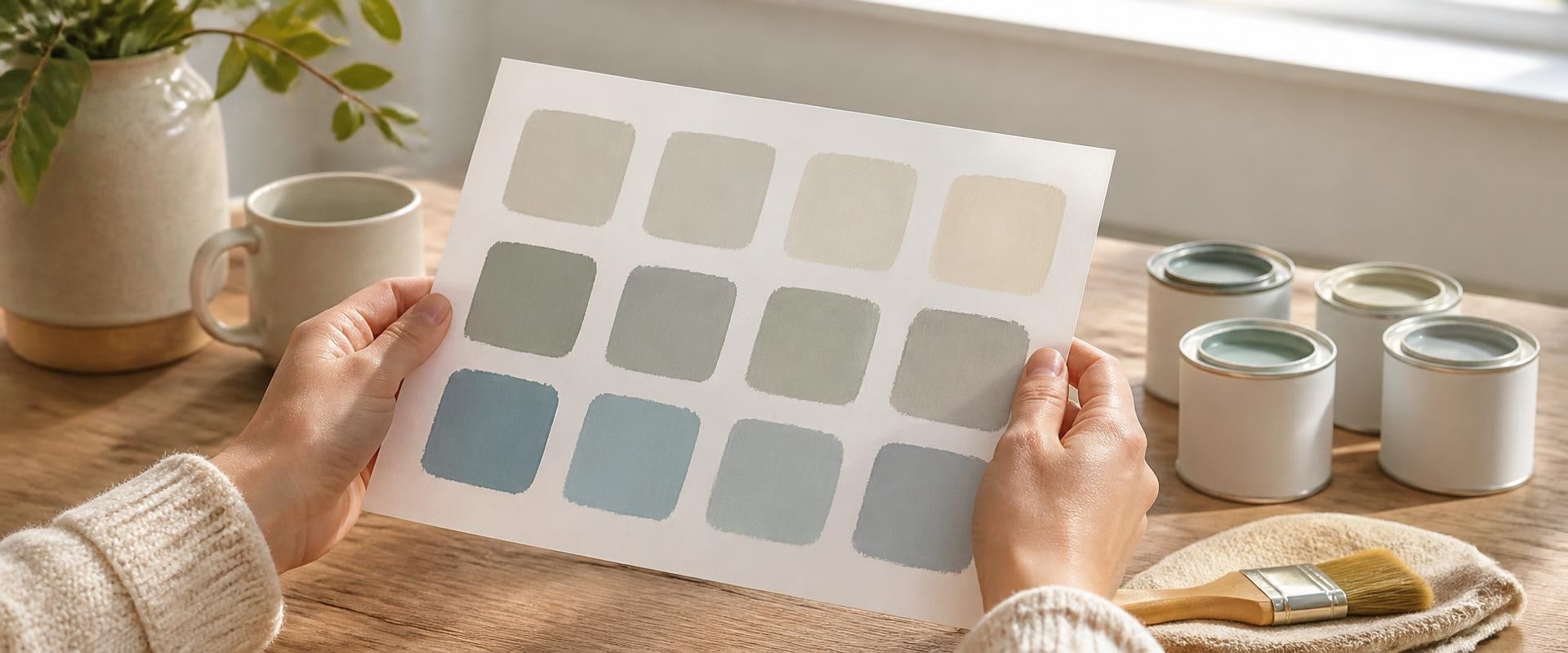
A page of painted squares is useful only if you can tell what made each square. An unlabeled blue might be a different paint, a second coat, or the same color on another paper. Make a small swatch sheet with enough information to recognize those differences when you return to it.
The method below uses watercolor on watercolor paper. Start with a few paints you already use and one question: how does each look in a single layer and after a second layer? Keep other experiments for another sheet.
Identify the paint before opening it
Give each paint a row and leave generous space beside it for writing. Copy its brand, product range, full color name, and any pigment codes provided on the label or the manufacturer's information for that exact paint. Record whether you used a tube or pan.
A color name alone is incomplete identification. The same name can appear in different ranges and media. Pigment codes describe the pigments used, but should sit alongside the product identity rather than replace it. If a code is unavailable, write “not listed” instead of guessing from a similar color.
For a transferred or unmarked pan, use a temporary identifier such as “unknown blue, palette position 4.” That swatch can still help you use the paint, provided its uncertain identity stays visible.
Give the sheet a shared setup note
Use one piece of watercolor paper for this comparison. Record its brand, range, surface, and weight if known, copying the wording from the pad or packaging. Hot-pressed and cold-pressed papers have different surface textures, so a result from one should not silently stand in for the other.
Add the date and the brush you used. State that the paper began dry and whether you added anything besides water. Keep this first sheet simple by leaving out additional mediums. Follow the materials' own handling instructions.
Draw two similarly sized boxes in each row. Label them “one layer” and “two layers.” Leave white space between the boxes and between rows. Put the setup note on the sheet itself so it cannot become separated from the samples.
Make the first layers consistently
Prepare a small puddle of one paint with water on your palette. Stir it before loading the brush, then paint both boxes in that row from that puddle. Use the same brush and a similar application for both, without repeatedly working one box while leaving the other alone.
Rinse the brush before changing colors and refresh dirty rinse water. Repeat the process for the remaining rows. Aim for a repeatable method rather than an exact concentration match across different paints.
Write down anything that breaks the plan: extra water added halfway through, a spill, or repeated brushing over one patch. Those details are more useful than trying to make every rectangle look tidy. If a sample becomes confusing, mark it for another attempt rather than concealing what happened.
Allow drying before adding the second layer
Let the first layers dry completely. Then add another layer of the same paint only to each box labeled “two layers,” using a gentle application. Watercolor can be reworked with water, so avoid scrubbing the dry first layer.
If you need to prepare fresh paint for the second pass, note that. Do not describe the concentrations as identical when you did not measure them. This is a practical reference for your own painting, with visible limits, rather than a controlled ranking of paint brands.
Let the completed sheet dry before writing your final comparisons. Avoid assigning one drying time to every setup. If your available painting time ends first, leave the sheet safely aside and continue the observations another day.
Try a small fictional example
Imagine Ellis making a sheet with two watercolor blues already in their palette. This is an invented planning example, not a performed paint test. Ellis copies both complete paint identities beside their rows and records the actual paper details at the top.
- Question: Which single-layer sample do I prefer for the background of a small boat sketch?
- Method: Dry paper, the same round brush, water only, two boxes per paint. Both boxes receive the first layer; only the right box receives another after drying.
- Observation prompts: Which dry sample looks lighter here? Is the color even or visibly textured? What changed in the second-layer box?
- Limit: The paint concentrations were estimated, so any preference applies to these samples and this application.
Ellis leaves the answers blank until the sheet is dry. A useful final note might identify a preferred box and a reason, then suggest trying it in the boat sketch. It should not declare that one blue will always behave the same way on every paper.
Keep the reference readable
Review the dry boxes together in the same lighting. Describe what you see beside the relevant sample, keeping observation separate from a future idea. “Try a lighter wash next time” is a plan, not a result.
Store the dry sheet with your painting references. When you change paper, paint range, or method, make a new labeled comparison rather than editing the old record to fit. A modest sheet you can interpret later is enough.