Write a Tiny Story With Six Homemade Prompt Cards
Make six original prompt cards, choose a small conflict, and finish a short story in one sitting using a worked example and a simple revision pass.
Hobbies and leisure activitiesIndoor activitiesWrite a Tiny Story With Six Homemade Prompt Cards
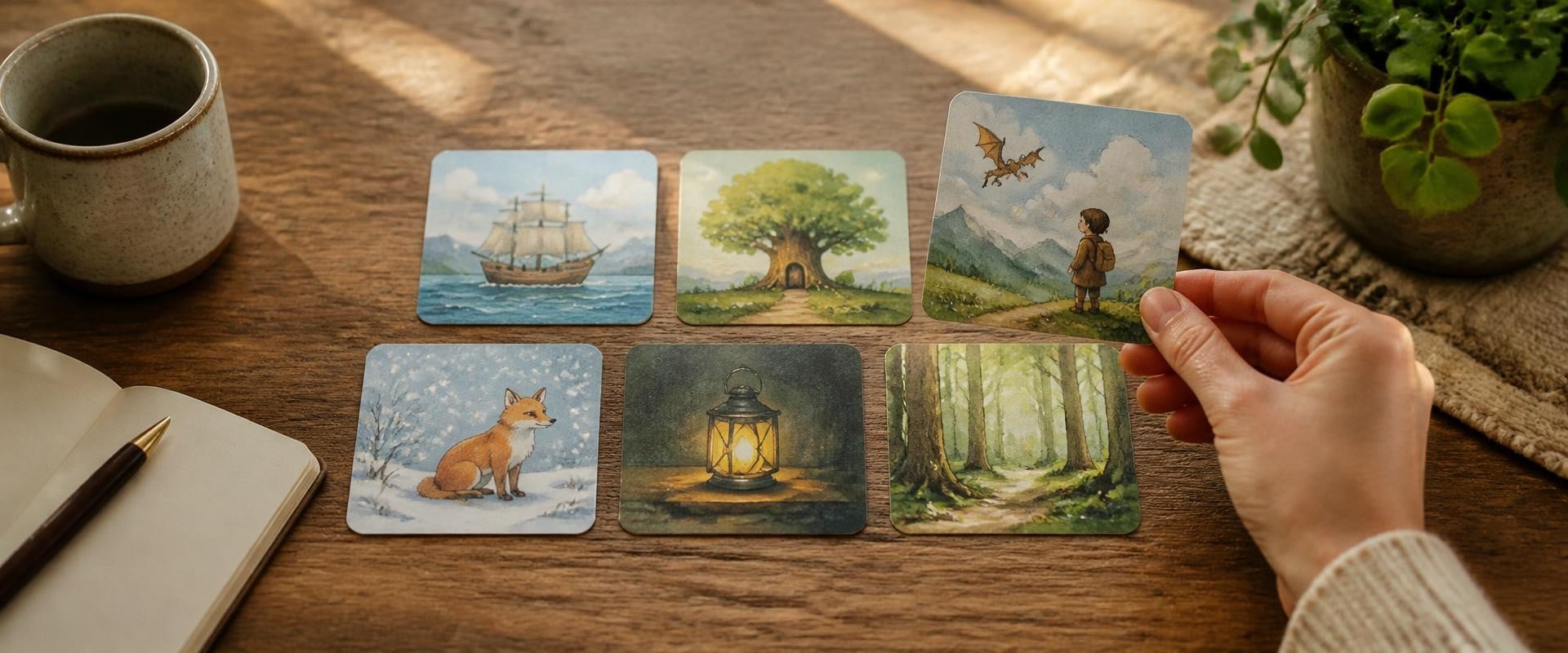
A blank page can leave you deciding everything at once: who the story follows, where it happens, and why anything happens at all. Six homemade prompt cards can give you just enough structure to begin without deciding the ending for you.
This is an original writing exercise for a short, private creative session. You can use scrap paper rather than buy a deck. The suggested timings and limits are optional. The useful result is one complete small story, not a particular word count or a piece ready for publication.
Make two choices in each of three categories
Label six slips of paper. Two will name places, two will describe objects, and two will give complications. Keep each prompt short enough to read at a glance. A complication should introduce a problem someone can respond to, rather than merely set a gloomy mood.
Here is a fictional starter set you can copy or replace:
- Place A: a village hall after a meeting.
- Place B: a nearly empty train carriage.
- Object A: an envelope with no name.
- Object B: a coat with one mismatched button.
- Complication A: someone must leave in ten minutes.
- Complication B: two people remember the same promise differently.
Keep the three categories separate. Choose one card from each pair, or turn each pair face down and draw one. Either method works for this exercise. You now have three ingredients, not six obligations.
Give one person a concrete wish
Before writing the opening, decide what one character wants in this scene. “Find out who left the envelope” gives the character something to do. “Discover the meaning of life” may be interesting, but it does not yet tell you what happens in this room.
Add one reason the wish matters. Perhaps the hall caretaker wants to return the envelope before locking up because it contains a handwritten farewell rather than routine paperwork. You do not need to invent the character's entire childhood to begin.
Use invented people and details. If a personal memory inspires you, avoid putting another person's private information into a piece you may later share. You can retain a feeling or a dilemma while changing the situation.
Sketch three moments before writing sentences
Write one line for the beginning, one for a choice, and one for a consequence. These are working notes, not headings you must include in the finished story. Try to make the consequence follow from the choice rather than appear as an unrelated surprise.
For the village hall, envelope, and ten-minute deadline combination, an invented outline might look like this:
- The caretaker finds an unaddressed farewell envelope as the last volunteer prepares to catch a bus.
- Instead of opening it, the caretaker asks the volunteer to help identify the handwriting.
- The volunteer recognizes her own old letter, takes it back, and decides to deliver it herself.
There is room to change that outline. It suggests a complete small movement without explaining every relationship. If your version needs a different ending, revise the outline rather than forcing the story to obey the first idea.
Write one scene, then finish it
For a suggested 25-minute session, use five minutes to prepare cards and choose a character, five to sketch the three moments, ten to write, and five to revise. Those times are a container for the activity, not a speed standard. Extend them if you want a slower session.
Keep the action in one main scene. Use enough description to orient the reader, then let the character make the choice. You can mention an earlier event without turning it into a second full scene.
If you reach the end of your writing time halfway through, write the final consequence in plain language. A simple ending gives you something complete to revise. You can make the wording more interesting later.
Revise the connection between events
Read the story once for clarity. Can a reader identify the character's wish, the obstacle, the choice, and what changes? If the ending depends on information you never supplied, add a small earlier detail or choose an ending the scene has earned.
Then remove one explanation the action already makes clear. You do not need to erase every rough sentence. Mark the date and keep the cards with the story, or write the chosen prompts above it.
For another session, change only one card and see how the scene shifts. An envelope and a mismatched coat invite different actions even in the same room. Reusing the structure lets you spend the next session writing rather than rebuilding the exercise.
Leanne Persten
Leanne Persten is a lifestyle writer and productivity coach who helps busy professionals reclaim their free time. With a background in organizational psychology, she writes about time management, hobby exploration, and building a fulfilling life outside of work. Leanne has been featured in several wellness publications and runs workshops on work-life balance strategies.